
by Eric Thor, Senior Director at Pivot >
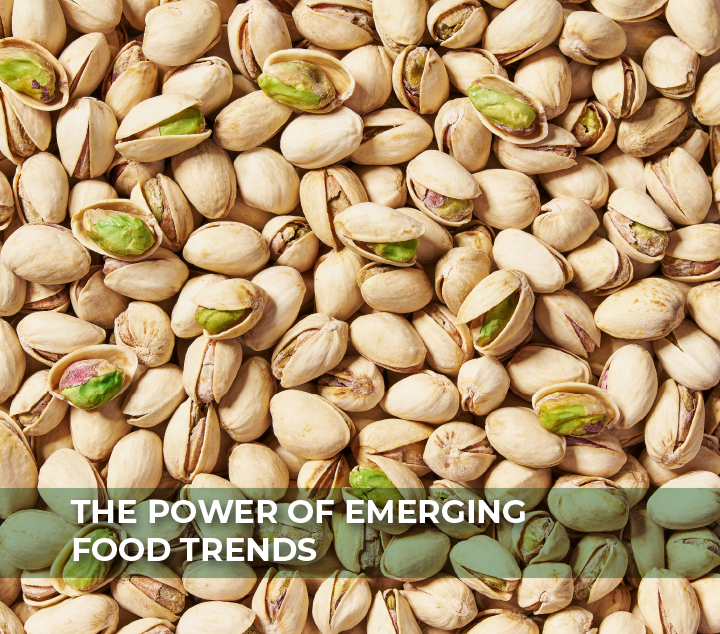
As global food trends evolve, entire categories begin to redefine themselves. Pistachios, traditionally associated with snacking, are now emerging as a serious player in the confectionery and food service space. This transition is the result of converging consumer trends, strategic supply decisions, and a growing recognition of untapped market potential.
Industry insiders call this shift the “Dubai Chocolate halo effect”—a signal that pistachios are gaining traction beyond their traditional role.
I recently attended the American Pistachio Grower Annual Meeting and saw early that pistachios are finally making the transition from snack food to part of the food service/confectionary. Demand continues to rise for kernels, which is driving the growth effect in the pistachio industry.
This shift toward kernels reflects a broader transformation: pistachios are no longer just a finished product; they are becoming an input into higher-value, experience-driven foods.
Why Pistachios Are Breaking Out
Several macro trends converge to create this demand driven opportunity:
1. Premiumization of Confectionary
Consumers are increasingly seeking premium ingredients in desserts, whether it’s artisanal chocolates, gelato, or baked goods. Pistachios, with their distinctive flavor, color, and perceived luxury, fit naturally into this space.
2. Global Flavor Exploration
Pistachios are deeply embedded in Middle Eastern and Mediterranean flavor profiles, which are gaining popularity worldwide. Anyone who has spent time in places like Italy has seen this firsthand, pistachio has long been a staple in gelato and pastries. What’s changing now is the scale, as these applications move into mainstream global demand. The “Dubai Chocolate” trend reflects this cultural influence translating more broadly.
3. Ingredient Transparency & Health Perception
Compared to other confectionery ingredients, consumers view pistachios as “better-for-you” due to their plant-based protein, healthy fats, and minimal processing. This makes them attractive to brands trying to balance indulgence with wellness.
From Snack to Ingredient, a Structural Shift
The most important development is not just increasing demand, it’s where that demand is coming from. Historically, pistachios were consumed primarily as a standalone snack. Today, their fastest-growing use case is as an ingredient.
Pistachios have been slower than other tree nuts to transition into the confectionary space. It is a new source of growth for the industry, a way to utilize the supply, and an interesting inflection point.
This matters because ingredient demand is structurally different from snack demand. It is more scalable (large-volume buyers like manufacturers), more stable (tied to product lines, not impulse purchases), and often commands higher margins (value-added applications). In other words, pistachios are moving up the value chain.
Importantly, any demand support at current pricing levels helps establish a profitability floor for the industry. Sustainable pricing also supports cash flow to farmers, which in turn enables repayment to lenders—making it beneficial across the broader financial ecosystem.
The Risk Beneath the Opportunity
Any agricultural boom warrants caution. Agriculture has a long history of overcorrecting in response to demand signals, leading to oversupply, price crashes, and margin erosion.
At the same time, production economics cannot be ignored. Costs to farm continue to increase, and if pricing does not rise over time, the cost of production could eventually overtake returns to farmers. Rising costs will also affect the entire value chain – from growers to processors, lenders, and ultimately consumers.
Another key risk is price sensitivity at the end of the chain. Processing shelled pistachios introduces additional costs, and at some point, higher prices may begin to deter consumers. If pistachios become too expensive for confectionery manufacturers, they may reduce or eliminate their use in products altogether. In addition to the risk of overplanting, the industry must consider the possibility of demand pullback if prices rise too far on the confectionery side.
The challenge for pistachios will be balancing short-term enthusiasm driven by new demand channels and long-term discipline in planting and production. The difference between a sustained growth story and a boom-bust cycle may hinge on this restraint.
Short-Term Spike or Long-Term Shift?
The key strategic question is whether this confectionery demand is durable or simply trend driven. I feel optimistic and think it has potential for long-term utilization. The more the pistachio industry moves into the confectionary space, the more demand support the industry will have.
This perspective aligns with broader food industry dynamics. Once an ingredient becomes embedded in product development pipelines – chocolate bars, spreads, pastries – it tends to persist. Manufacturers build around it, consumers develop expectations, and supply chains adapt. In that sense, confectionery is not just a new channel, it’s a demand stabilizer.
What This Means for the Industry
The pistachio industry is at an inflection point. The shift into confectionery signals a broader redefinition of the category, moving pistachios beyond snacking and into a more strategic role within the food ecosystem.
If managed well, this transition could diversify demand, increase resilience against market volatility, and position pistachios as a premium, multifunctional ingredient. The recent surge of interest may have been sparked by trends like the “Dubai Chocolate” moment, but the deeper story is rooted in evolving consumer preferences, global flavor influence, and ongoing product innovation.
At the same time, success will depend on discipline. The industry must strike a balance between rising prices needed to sustain growers and maintaining affordability for end users. If farming becomes unprofitable, supply will decline, which could further push prices higher, reinforcing the need for equilibrium across the system. Over-expansion could undermine pricing power, while underinvestment could mean missing a critical window of opportunity.
